Petroglyphs
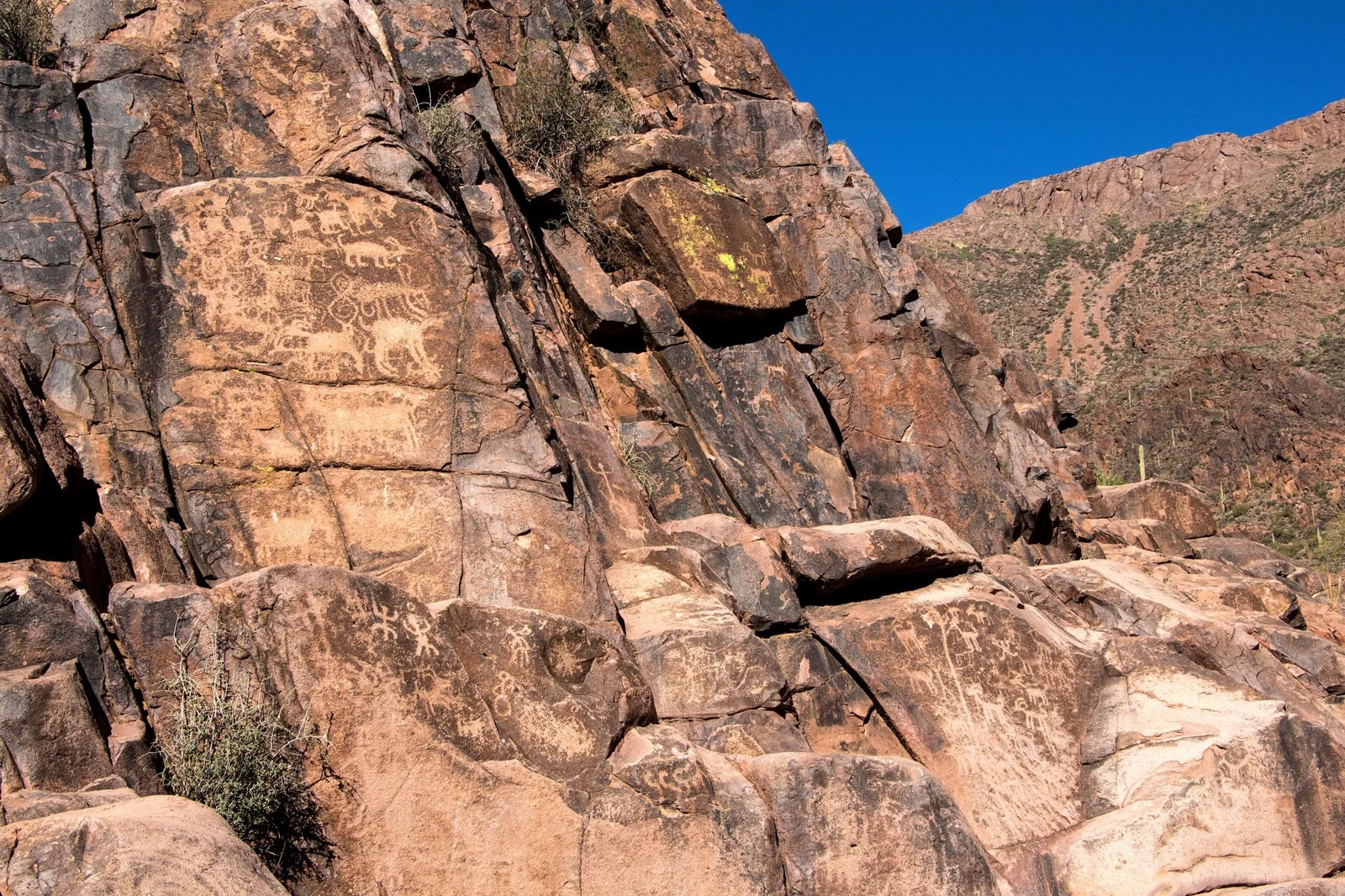
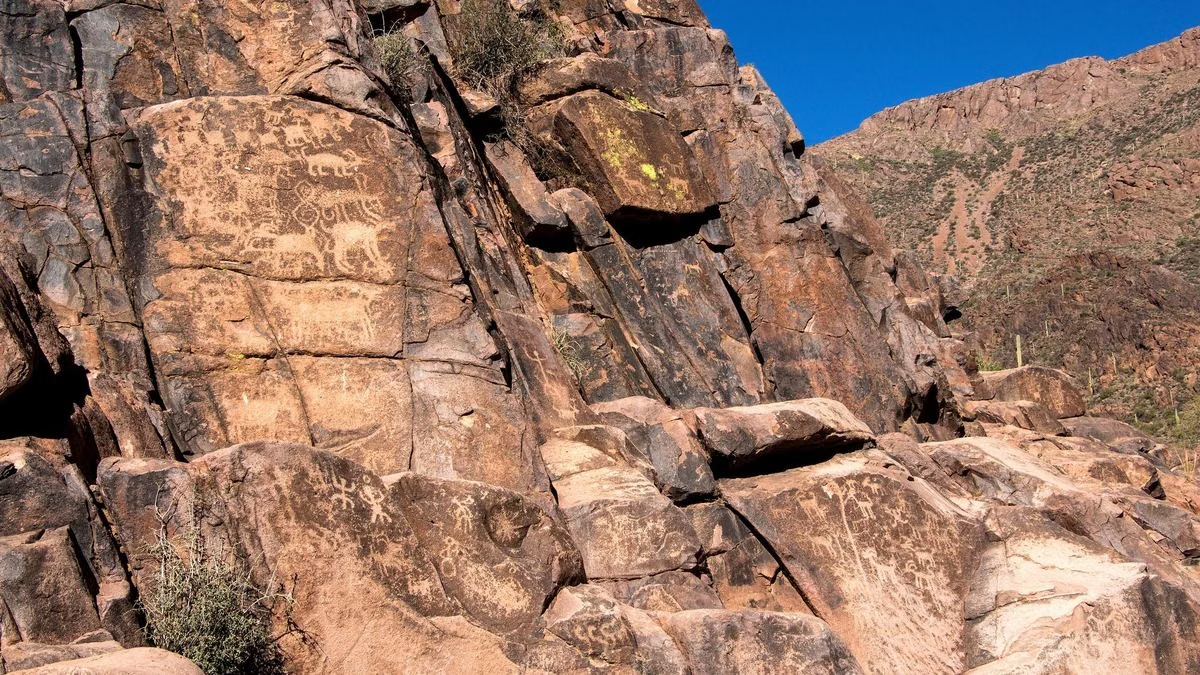
South Mountain Park and Preserve is home to thousands of petroglyphs, most of them left by the Hohokam, a culture that lived in central and southern Arizona from about AD 450 to 1450. The City of Phoenix lists rock art along the Judith Tunell Accessible Trail, the Telegraph Pass, Kiwanis, Mormon Loop, Desert Classic, Mormon and Holbert trails. The images show animals, birds, people and geometric designs. Look and photograph from the trail: the oils on your hands damage the rock.
Rock Art at a Glance
What the Petroglyphs Are
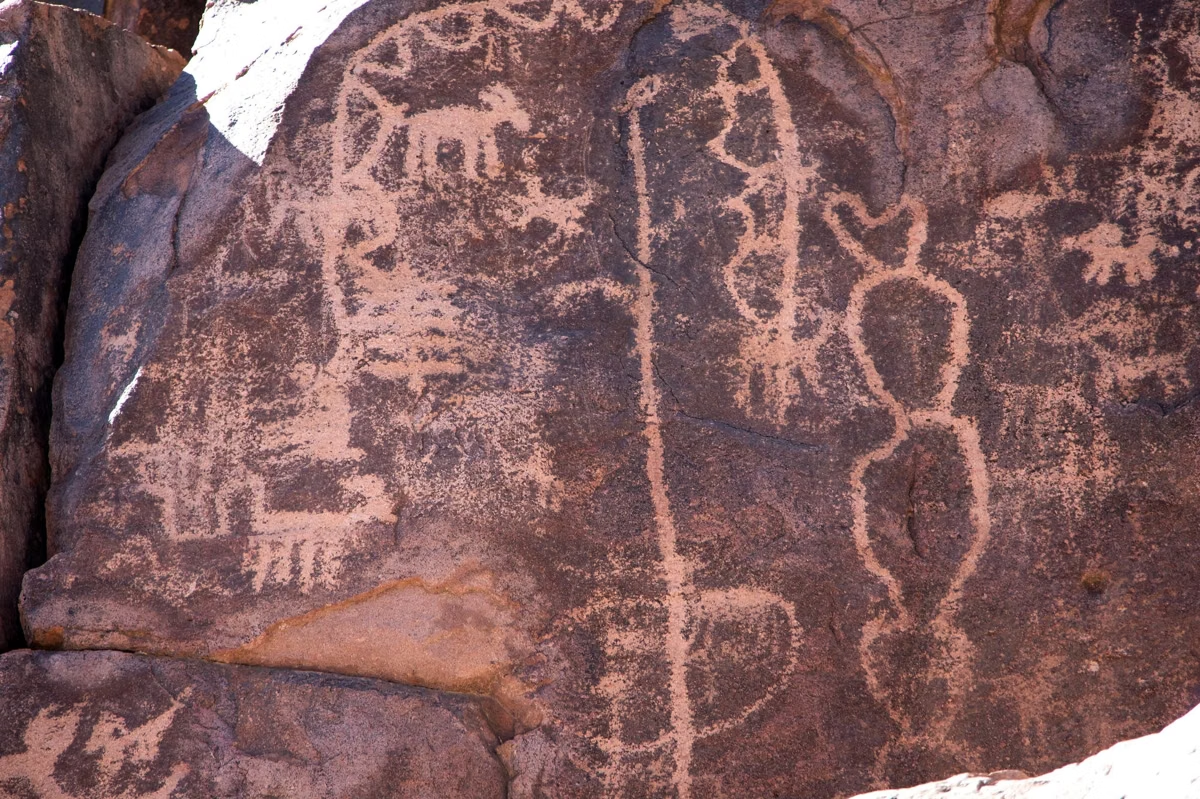
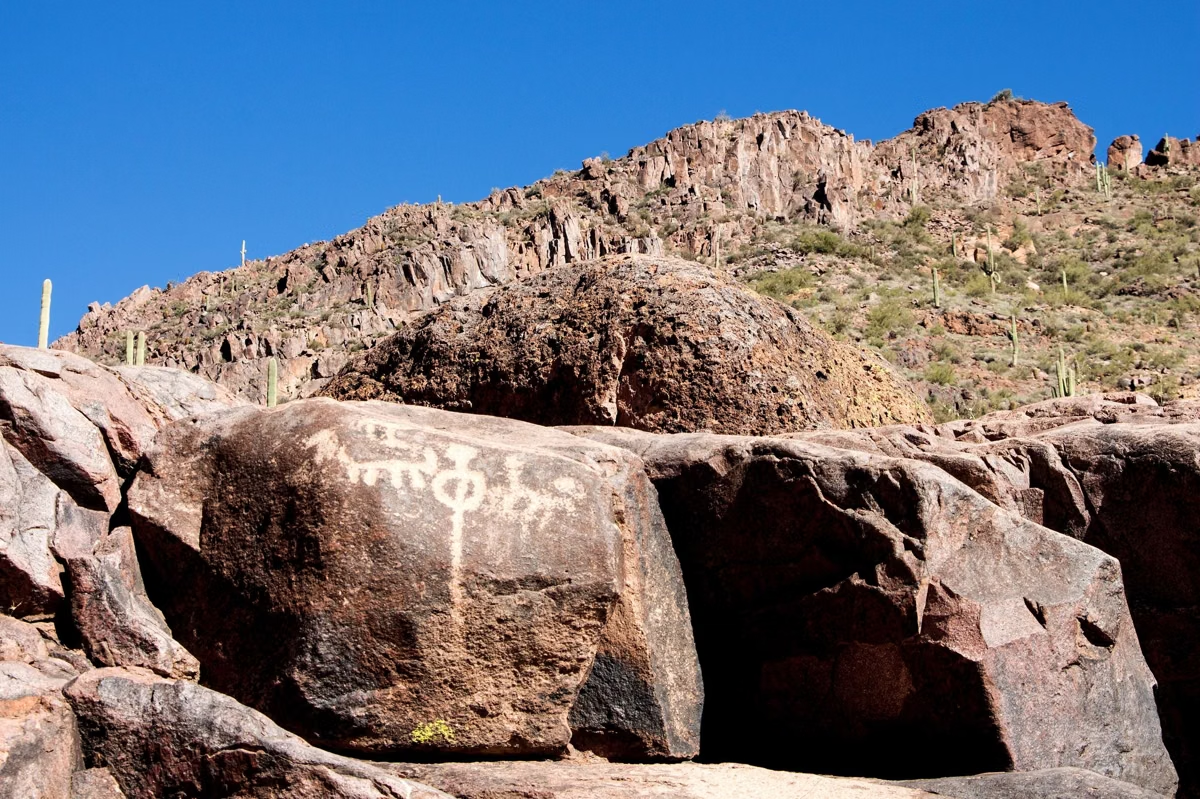
The City describes petroglyphs as rock art made by pecking away the weathered outer layer of a stone to expose the lighter rock underneath. At South Mountain they include:
- Life forms: animals, birds and people.
- Geometric designs.
- Shapes and lines that may have had symbolic meaning.
They are not writing: there are no words or numbers. Because the Hohokam left no written language, the City notes, no one is certain what the symbols mean.
Who Made Them
The name Hohokam roughly translates as "those who have gone." According to the City, the Hohokam probably did not live in the South Mountains, but evidence suggests they hunted, gathered plants, tended gardens or fields, held ceremonies and traveled here. The mountains were probably sacred to them, as they are to local tribal communities today, and the rock art may mark places that mattered or record what people did there.
Where to See Rock Art
The City's guide lists these trails:
- Mormon Trail and Mormon Loop Trail — from the Mormon Trailhead, 8610 S. 24th St.
- Holbert Trail — from the Holbert Trailhead inside the main entrance.
- Kiwanis Trail — a 1-mile canyon trail off Piedras Drive.
- Telegraph Pass Trail — from the Desert Foothills Trailhead, 14251 S. Desert Foothills Pkwy.
- Desert Classic Trail — from the Pima Canyon Trailhead.
- Judith Tunell Accessible Trail — the paved loops at the Visitor Center, the easiest place to start.
Rules and Etiquette
- Stay on the trail. The City asks visitors to view rock art from the trail; it protects both the petroglyphs and wildlife habitat, and off-trail travel is prohibited in the preserve.
- Don't touch. Skin oils damage the rock surface.
- Take pictures only. The City's advice is "leave no trace": take only photographs, leave only footprints.
- Leave artifacts in place. Pottery pieces and sharpened stone tools in the canyons are remnants of Hohokam activity and must stay where they are. Some artifacts from South Mountain are on display at Pueblo Grande Museum.
Learn More
The City recommends *Landscape of the Spirits: Hohokam Rock Art at South Mountain Park* by T. Bostwick and P. Krocek (University of Arizona Press, 2002), available through local libraries or Pueblo Grande Museum. The South Mountain Visitor Center has exhibits on the park's history (About the Park).
Petroglyphs FAQ
Are there petroglyphs at South Mountain?
Yes, thousands of them, according to the City of Phoenix, mostly made by the Hohokam between about AD 450 and 1450.
Which South Mountain trail has the most petroglyphs?
The City doesn't rank them. Its rock-art guide lists the Judith Tunell Accessible, Telegraph Pass, Kiwanis, Mormon Loop, Desert Classic, Mormon and Holbert trails.
Can you touch the petroglyphs?
No. The oils on your hands damage the rock art. View and photograph petroglyphs from the trail.
Who made the South Mountain petroglyphs?
Mostly the Hohokam, a culture that lived in central and southern Arizona from about AD 450 to 1450.